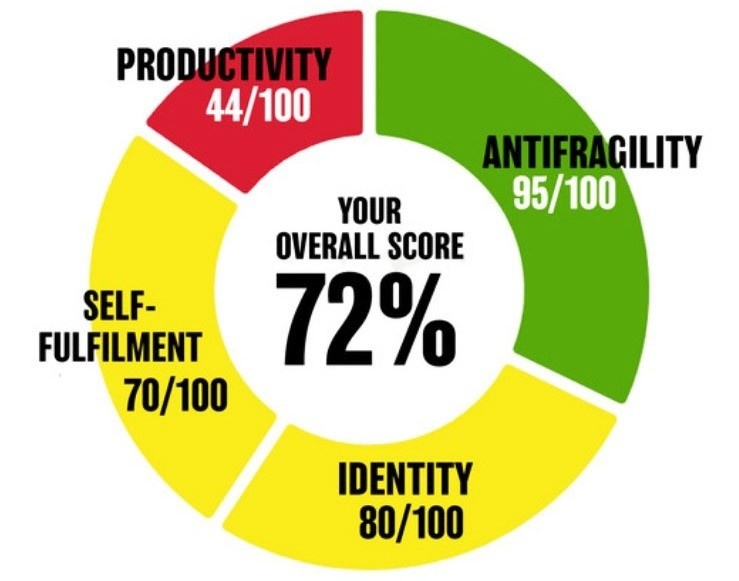
Are you operating at your full potential? Take the 3 minute test to find out.

How to Be a Better CEO Using the GROW Coaching Model

Become a better CEO in just 37 minutes

Become a better CEO in just 37 minutes

Get exclusive access to your free training today

    We will never sell your information to third parties

    Become a better CEO in just 37 minutes

    Get exclusive access to your free training today

      If you want to learn how to be a better CEO, start by looking at how you show up in conversations with your team.

      Most founders and CEOs I work with are incredibly capable. They’re decisive, driven, and used to solving problems quickly. That’s often how they built the business in the first place. But as the company grows, that same instinct — to jump in with answers — starts to create a bottleneck.

      Your team comes to you for direction. You give it. They execute. And for a while, it works. But over time, something shifts.

      People become dependent. Decision-making slows down unless you’re involved. You find yourself pulled into more and more conversations, not because you want to be, but because the business has quietly trained itself to rely on you.

      This is where many CEOs get stuck. Because becoming a better CEO isn’t about having better answers. It’s about building a team that doesn’t always need them from you in the first place.

      That requires a different approach — one rooted in good CEO habits, mindset, and ultimately, how you develop others. Instead of solving every problem, you need to start coaching your team to think, decide, and take ownership.

      That’s where the GROW coaching model comes in. It’s a simple framework that, when used consistently, changes the way your team operates. It helps you shift from being the person with all the answers to the person who builds people capable of finding them.

      And that shift is one of the fastest ways to become a better CEO.

      Why Most CEOs Struggle to Develop Their Teams

      One of the biggest misconceptions I see among CEOs is the belief that being helpful is always the right move. A team member comes to you with a problem. You understand it quickly. You’ve probably seen it before. So you give them the answer. It feels efficient. It is efficient — in the moment.

      But there’s a hidden cost. Every time you solve a problem for someone, you reinforce a pattern. You train them to come back to you the next time they’re unsure. Over time, that creates a subtle but powerful dependency. Your team becomes faster at escalating issues than they are at resolving them. And without realizing it, you become the bottleneck.

      This is where the gap between intention and outcome shows up. Most CEOs want a team that takes ownership, thinks independently, and moves quickly. But their day-to-day behavior often produces the opposite — a team that waits for direction, seeks validation, and hesitates to act without approval. It’s not a capability issue. It’s a conditioning issue.

      The underlying problem is that many leaders equate coaching with giving advice. In reality, those are two very different things. Advice solves the problem for the person that’s facing it. Coaching enables the person that’s facing the problem to solve it themselves.

      If you continue to operate as the primary problem-solver, you might maintain short-term speed but limit long-term scale. The business can only move as fast as you can think, decide, and respond. Developing your team requires a shift in your CEO mindset — from being the person who provides answers to the person who trains others to find them.

      This is also why executive performance coaching is so effective at the CEO level. It forces a change in behavior, not just understanding. You start to notice how often you jump in too early, how quickly you steer conversations, and how rarely you allow others to fully think things through.

      Once you see that pattern, you can begin to change it. And that’s where a structured approach becomes useful. Because telling yourself to “coach more” isn’t enough. You need a simple way to do it consistently, especially in the middle of a busy day. That’s exactly what the GROW model provides.

      The Shift from Solution Provider to Coach

      If you look closely at how most CEOs operate day to day, a pattern emerges. They are highly responsive. Problems surface, and they resolve them quickly. Decisions are needed, and they make them. Someone is stuck, and they unblock them.

      Individually, these are all positive behaviors. They create momentum and keep things moving. But at scale, they create a dependency loop. The more you step in with answers, the more your team relies on you to provide them. Over time, this shapes how people think and behave. Instead of fully working through problems, they bring them to you earlier. Instead of committing to a course of action, they look for validation.

      Breaking that pattern requires a deliberate shift in how you show up in those moments. Instead of asking, “What’s the fastest way to solve this?”, you start asking, “How do I help this person think through this properly?”

      That doesn’t mean you never give direction. There are situations where speed matters and a clear answer is the right call. But in many cases, especially where development is the goal, the better approach is to slow the conversation down just enough to let the other person do the thinking. 

      When you coach effectively, a few things start to change. First, ownership increases. People are more likely to follow through on decisions they’ve arrived at themselves. They’re not just executing instructions — they’re committing to a course of action.

      Second, decision-making improves across the team. As individuals get used to thinking through problems, weighing options, and taking responsibility for outcomes, the overall quality of decisions rises.

      Third, your involvement becomes more focused. You’re no longer pulled into every operational detail. Instead, you engage where your input genuinely adds value.

      This is one of the most important transitions in learning how to be a better CEO. You move from being central to every decision, to building a team that can operate effectively without constant input from you. It doesn’t happen overnight, and it doesn’t happen by intention alone. It requires changing how you handle dozens of small interactions each week.

      That’s why having a simple structure matters. Because in the middle of a busy day, you don’t have time to think, “What’s the best coaching approach here?” You need something you can apply quickly and consistently. That’s what the GROW model gives you.

      A Simple Breakdown of the GROW Coaching Model

      Once you make the shift from giving answers to coaching your team, the next challenge is consistency.

      It’s one thing to intend to coach more. It’s another to do it well, especially when you’re busy, under pressure, or trying to move quickly.

      The GROW coaching model gives you a simple structure you can rely on in real conversations. It helps you stay focused, ask better questions, and guide someone from problem to action without taking over.

      GROW stands for four stages: Goal, Reality, Options, and Will.

      Goal
      Start by clarifying what the person is trying to achieve. Often, people come to you with a problem, but they haven’t clearly defined what success looks like. They might describe a situation, a frustration, or a task — but not a concrete outcome.

      Your role here is to bring clarity. What are you trying to achieve? What would a good outcome look like? How will you know when you’ve succeeded?

      Without that clarity, the rest of the conversation tends to drift. With it, you create direction.

      Reality
      Once the goal is clear, the next step is to understand the current situation as accurately as possible. This is where honesty matters.

      What’s actually happening right now? What’s working and what isn’t? What’s getting in the way?

      In my experience, this is the step that people are most likely to gloss over. There’s a tendency to jump quickly to solutions. But if the reality isn’t properly understood, the solutions tend to miss the mark.

      As a CEO, your role here is to help the person think clearly about the situation, not to interpret it for them.

      Options
      With a clear goal and an honest view of reality, you then move into exploring possible ways forward.

      You have to be careful here to not instinctively jump in with your own answer. You’ve seen similar problems before, and you know what you would do. But if your objective is to develop the person, not just solve the problem, you need to hold back.

      Instead, ask:

      What are the different ways you could approach this?
      What else might work?
      If constraints weren’t an issue, what would you try?

      The aim is to expand their thinking. You’re helping them generate options, not narrowing the conversation too early.

      You can still contribute your perspective if needed, but it should come after they’ve done the thinking themselves.

      Will
      Finally, the conversation needs to move from thinking to action.

      What are you going to do next? When will you do it? What does success look like in the short term?

      This is where accountability comes in. Without a clear commitment, even the best conversation won’t serve its purpose. People leave with good intentions, but no concrete follow-through.

      By ending with a specific action and timeline, you turn the conversation into progress.


      The strength of the GROW model is in its practicality. It gives you a repeatable way to guide conversations so that your team leaves with clarity, ownership, and a plan — rather than just an answer from you. Used consistently, it becomes one of the most effective tools for improving how your team thinks, decides, and executes.

      How to Use the GROW Model as a CEO

      Understanding the structure of the GROW model is one thing. Applying it in the middle of a busy week, with real people and real pressure, is something else entirely.

      Where I see this become most valuable is in everyday leadership moments — not formal coaching sessions, but the quick conversations that happen between meetings, in Slack, or during a one-to-one.

      Let me walk you through how this looks in practice.

      Goal: Define What Success Actually Looks Like

      A team member comes to you and says, “I’m struggling with this client account.”

      The first step in such a situation is to slow that down and clarify the goal. What exactly are you trying to achieve with this account? What would a good outcome look like over the next few weeks?

      Often, the issue isn’t just the problem itself — it’s a lack of clarity around what success looks like. Without that, the conversation stays vague, and any solution is likely to be unfocused. By anchoring the discussion around a clear goal, you give direction to everything that follows.

      Reality: Get Honest About What’s Happening

      Once the goal is defined, the next step is to understand the current situation.

      What’s happening right now with the client?
      Where are things going well, and where are they breaking down?
      What have you already tried?

      A lot of people either gloss over the details or present a filtered version of reality. As a CEO, your role is to help them think clearly and objectively about the situation.

      Sometimes that means asking follow-up questions. Sometimes it means challenging assumptions. The aim is not to interrogate, but to ensure that the picture you’re working with is accurate.

      Options: Help Them Think, Don’t Jump In Too Early

      At this point, you’ll probably have a strong view on what should be done. Exercise restraint. Shift the focus back to them.

      What are the different ways you could approach this? If you had to solve this without my input, what would you do?

      In many cases, they’ll arrive at a solid option themselves. In others, they may need a nudge. That’s fine. You can contribute your perspective, but it should build on their thinking, not replace it.

      This is one of the most powerful CEO habits you can develop. It turns everyday conversations into opportunities for growth.

      Will: Turn Thinking into Action

      You’ve had a good discussion. Ideas have been shared. But without a clear next step, nothing changes.

      So you bring it back to action. What are you going to do next? When will you do it?
      What does success look like in the next few days? This creates accountability.

      It also reinforces ownership. The person leaves the conversation with a clear plan that they’ve helped shape, rather than instructions they’ve been given.


      Used this way, the GROW model becomes a natural part of how you lead. You create a pattern where your team thinks more clearly, takes more ownership, and executes with greater confidence.

      Stack those up and they translate into better performance across the business over time.

      Common Mistakes CEOs Make When Coaching

      Once CEOs start using a coaching approach, there’s often an initial improvement — conversations become more thoughtful, and the team starts to engage more. But without a bit of discipline, it’s easy to fall into patterns that limit the effectiveness of the GROW model.

      These aren’t obvious mistakes. In fact, they often come from good intentions. But they can quietly pull you back into being the bottleneck.

      The first is asking leading questions instead of genuine ones.

      On the surface, it looks like coaching. You’re asking questions rather than giving answers. But if those questions are designed to steer the person toward your preferred solution, you’re still doing the thinking for them.

      You might ask, “Don’t you think it would be better to approach it this way?” or “Have you considered doing X?” The intent is helpful, but the effect is the same as giving advice — you’re guiding them to your answer rather than helping them arrive at their own.

      Effective coaching requires a degree of neutrality. You need to be willing to let them explore different directions, even if it’s not the one you would immediately choose.

      The second mistake is turning the conversation into an interrogation.

      Some CEOs, once they adopt a framework like GROW, lean too heavily on it. They fire off question after question without creating space for reflection or dialogue. The conversation becomes mechanical rather than productive.

      Good coaching is not about rigidly following a script. It’s about using the structure to guide thinking while still maintaining a natural, human interaction.

      The third is skipping over reality too quickly.

      There’s often a temptation to move straight from defining the goal to discussing solutions. It feels more productive. But if the current situation isn’t properly understood, the options you generate are likely to be based on incomplete or inaccurate assumptions.

      Spending time clarifying what’s happening — what’s working, what isn’t, and why — leads to better decisions downstream.

      The fourth, and probably the most common, is failing to follow through.

      A strong coaching conversation can create clarity and momentum, but if nothing happens afterwards, that progress is lost. Without a clear commitment and some form of accountability, even the best ideas tend to fade.

      From the team’s perspective, it signals that the conversation wasn’t that important after all.

      Avoiding these mistakes requires awareness. If you can stay genuinely curious, keep the conversation balanced, take the time to understand reality, and ensure there’s follow-through, the quality of your coaching will improve quickly.

      And as it does, so will the capability of your team.

      Why This Is One of the Fastest Ways to Become a Better CEO

      If you strip this back to fundamentals, improving as a CEO is not about doing more. It’s about operating differently in the moments that matter. And few shifts have a bigger impact than moving from solving problems yourself to developing people who can solve them without you. This is why coaching — done properly — is such a powerful lever. When you consistently use a framework like GROW, you start to see changes that go beyond the individual conversation.

      First, decision-making improves across the business. Instead of waiting for direction, people begin to think through problems more thoroughly. They weigh options, consider trade-offs, and take greater ownership of outcomes. Over time, the quality of decisions increases because you’re less involved and the people around you are more capable.

      Second, you remove yourself as a bottleneck. One of the biggest constraints on growth is a CEO who is involved in too many decisions. Even if you’re fast, there’s a limit to how much you can process. Coaching shifts that dynamic. It distributes thinking across the team, which allows the business to move faster without increasing your workload.

      Third, accountability becomes stronger and more natural. When someone arrives at their own course of action and commits to it, they are far more likely to follow through. You’re no longer chasing updates or reinforcing expectations constantly. Ownership sits where it should — with the person responsible.

      Fourth, your time gets redirected to higher-value work. Instead of being pulled into operational detail, you can focus on areas where your input is genuinely required — strategy, hiring, culture, and the broader direction of the business.

      Taken together, these shifts compound. The business becomes more resilient. The team becomes more capable. Execution becomes more consistent. And importantly, progress no longer depends on your constant intervention.

      This is a core part of how to be a better CEO. It also reinforces several of the CEO habits that underpin strong leadership — clarity of thinking, discipline in communication, and a focus on long-term capability over short-term convenience.

      When those habits are in place, supported by a simple framework like GROW, the effect is disproportionate.

      What This Means for CEOs

      The GROW model is a perfect example of a simple, no-nonsense framework whose impact is felt from using it consistently, especially in the moments where your instinct is to jump in and take over.

      When you’re busy, when decisions need to be made quickly, when the stakes are high — your default is to solve. To give the answer. To move things along. And in doing so, you reinforce the very dependency you’re trying to eliminate.

      Becoming a better CEO requires interrupting that pattern. It means slowing down just enough to ask the right question instead of giving the immediate answer. It means creating space for your team to think, even when it would be faster to tell them what to do. And it means holding the line on that approach consistently, not just when you have time.

      This is where most leaders struggle, because they don’t have the structure or accountability to apply such practices under pressure.

      That’s why executive performance coaching can be so effective at this level. It doesn’t just introduce concepts like GROW; it reinforces them through repetition, feedback, and real-world application. It helps you identify where you’re defaulting to old patterns and gives you the discipline to replace them with better ones.

      If that’s something you’re working towards, it’s exactly what we focus on inside The Founder & CEO Accelerator https://ericpartaker.com/the-ceo-accelerator — helping CEOs build the habits, systems, and leadership behaviors that allow them to scale both themselves and their business.

      Ultimately, learning how to be a better CEO is about doing fewer things but better and more consistently.

      What You Should Do Next

      1. Download my FREE ebook The 3 Alarms.
      2. Learn how to scale yourself and your company in one of our free, live sessions.
      3. Take our free training “Become a Better CEO in 37 Minutes” and sharpen your skills as a leader.
      4. Apply now for the Founder & CEO Accelerator and become the elite CEO your team deserves.

      Follow:
      Eric Partaker has been recognized as the CEO of the Year, one of the Top 30 Entrepreneurs in the UK, and one of Britain's 27 Most Disruptive Entrepreneurs. Over more than 25 years, Eric has advised Fortune 50 CEOs at McKinsey & Company, helped build Skype’s multi-billion dollar exit to eBay, and helped scale 600+ companies. Today he runs the ScaleOS 10x Coaching Program and The Founder & CEO Accelerator - both online CEO coaching programs that help ambitious CEOs scale their companies and become world-class leaders. He is also the author of the Amazon bestseller The 3 Alarms and the upcoming book Ultraproductive, which help people maximize their productivity and operate at their full potential.

      Join the 2% of people operating at their full potential. Receive a concise, actionable, peak performance insight, delivered straight to your inbox every 7 days. Over 235,000 people subscribe. Enter your email now and join us.

      Become a better CEO in just 37 minutes

      Become a better CEO in just 37 minutes

      Get exclusive access to your free training today

        We will never sell your information to third parties

        Home
        Account
        Cart
        Search

        Is Your Company Ready to Scale?

        Take our 3 minute assessment to find out.