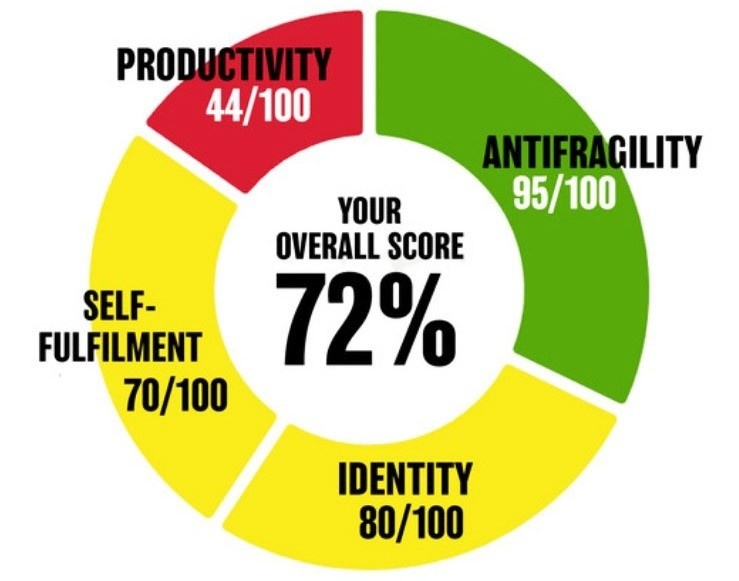
Are you operating at your full potential? Take the 3 minute test to find out.

How to Upgrade Your CEO Mindset and Operate at a Higher Level

Become a better CEO in just 37 minutes

Become a better CEO in just 37 minutes

Get exclusive access to your free training today

    We will never sell your information to third parties

    Become a better CEO in just 37 minutes

    Get exclusive access to your free training today

      Every now and then, you come across someone operating at a level that feels almost unreasonable.

      It might be a CEO navigating a high-stakes situation who somehow becomes calmer as the pressure rises. Or a founder making difficult decisions without hesitation or drama. Or a leader who can deliver hard truths to their team without damaging trust or morale.

      And you find yourself wondering: How are they doing that?

      What you’re really asking is something deeper: What does it take to become the kind of leader who can be trusted with bigger outcomes? Bigger revenue targets. Bigger teams. Bigger responsibility.

      Because that’s what upgrading your CEO mindset is all about. It’s not about feeling more confident. It’s not about being more motivated. And it’s definitely not about waiting for the right internal state before you step up. It’s about how you operate.

      In my experience—whether advising CEOs, helping scale businesses, or running one myself—the leaders who perform at the highest level aren’t “built differently.” They’re not relying on bursts of motivation or waiting to feel ready. They’re structured differently.

      Most CEOs, especially as they grow, fall into a subtle trap. They assume that as the business scales, they’ll naturally grow into the role. That experience alone will shape them into the leader the company needs.

      But experience is a slow teacher. And often an expensive one. If you rely on it alone, you will grow—but you’ll grow later than you should, and you’ll make mistakes you didn’t need to make along the way.

      The CEOs who scale faster don’t leave that to chance. They’re intentional about how they develop. They treat their own growth as seriously as they treat the business.

      This is something I see repeatedly in executive performance coaching: the moment a leader stops waiting to feel ready and starts building systems that make high performance inevitable, everything changes.

      Their decisions get sharper. Their reactions become more controlled. Their results start to compound.

      Because they’re no longer operating based on mood. They’re operating based on standard.

      If you want to upgrade your CEO mindset and operate at a higher level, you don’t need another burst of motivation. You need a better way of operating—one that holds up on a random Tuesday, when nothing feels particularly inspiring, and everything still depends on you.

      What Most Get Wrong About Having a “CEO Mindset”

      When people talk about CEO mindset, it often drifts into vague territory. Confidence. Positivity. Resilience. Maybe a few quotes about thinking big.

      None of that is wrong—but it’s not particularly useful when you’re sitting in a real situation, with real consequences, and a decision that actually matters.

      In practice, your CEO mindset isn’t defined by how you think when things are easy. It’s defined by how you operate when they’re not.

      It shows up in moments like:

      • When a key hire isn’t working out and you need to act quickly 
      • When numbers are off and the team is looking to you for clarity 
      • When you have incomplete information but still need to make a call 
      • When pressure is building and everyone else is reacting emotionally 

      That’s where mindset stops being abstract and becomes operational.

      Over the years, what I’ve seen—both in myself and in the CEOs I’ve worked with—is that most leaders don’t struggle because they lack ambition or intelligence. They struggle because there’s a gap between what the business now requires… and how they currently operate.

      The business grows. Complexity increases. Stakes get higher. But the way they make decisions, manage pressure, and lead others stays roughly the same.

      And that gap is where friction shows up. You see it in hesitation. In overthinking. In avoiding hard conversations. In reacting emotionally when things don’t go to plan.

      It’s not a character flaw. It’s a capability gap. And this is where upgrading your CEO mindset becomes practical.

      It’s about building the ability to:

      • stay clear when things get messy 
      • make decisions without unnecessary drama 
      • hold a higher standard, even when it’s uncomfortable 
      • take full ownership of outcomes—especially when they don’t go your way 

      That’s the level you need to operate at if you want to lead something that’s growing. Because as your business scales, the demands don’t just increase—they change.

      What got you here won’t get you there is a cliché, but in this case it’s accurate. The version of you that started the business isn’t always the version that can scale it. At some point, you have to become someone else operationally.

      That doesn’t mean changing who you are at your core. It means upgrading how you show up. And that’s the real work behind developing a stronger CEO mindset.

      The 5-Step Framework to Upgrade Your CEO Mindset

      When I talk about upgrading your CEO mindset, I’m not talking about abstract ideas or personality traits.

      I’m talking about changing how you operate—consistently, under pressure, over time.

      These five shifts are the ones I see make the biggest difference. They address the real constraints that show up as you grow a business. If you get these right, everything else becomes easier.

      1. Treat Learning Like a Leadership Discipline

      One of the most common mistakes I see—especially with capable, driven CEOs—is relying too heavily on experience. The assumption is: I’ll figure it out as I go.

      And to a degree, you will. Experience is a powerful teacher. But it’s also slow. It’s messy. And in many cases, it’s expensive.

      You learn by making mistakes that could have been avoided. You discover patterns after you’ve already paid the price for missing them.

      The CEOs who scale faster don’t rely on experience alone. They compress time by learning deliberately. This is where upgrading your CEO mindset becomes very practical.

      Instead of asking, “What do I feel like learning?”, the question becomes: “What capabilities does the next version of me require?”

      Because the gap between where you are and where you want to be is rarely about effort. It’s about capability.

      If you’re leading a growing team, that might mean improving how you communicate expectations and feedback; making better, faster decisions with incomplete data; thinking more strategically instead of staying stuck in execution. 

      If you’re scaling a business, it might mean understanding distribution and growth channels more deeply, getting better at hiring and developing leaders, or building a stronger operating rhythm across the company.

      This is something I’ve seen consistently through executive performance coaching. The CEOs who make the biggest leaps are the ones who treat their development like a structured discipline. They schedule it. They protect it. They tie it directly to what the business needs next.

      Because if learning isn’t on the calendar, it doesn’t happen. It gets pushed aside by urgent emails, meetings, and short-term problems. And over time, that creates a bottleneck. The business evolves—but the CEO doesn’t keep pace.

      2. Upgrade Your Environment

      There’s a pattern I’ve noticed repeatedly when working with CEOs. Put the same person in two different environments, and you’ll get two very different versions of them.

      In one setting, they’re sharp, decisive, and ambitious. In another, they’re hesitant, reactive, and far more conservative in how they operate.

      It’s easy to misinterpret that as inconsistency in the individual. In reality, it’s usually a reflection of the environment they’re operating in.

      Your environment—particularly as a CEO—is not neutral. It is constantly shaping your standards, often in ways that are subtle enough to go unnoticed.

      You calibrate to what you see around you. You absorb what’s considered acceptable. You internalize the pace, the ambition, and even the emotional tone of the people you spend the most time with.

      If you’re surrounded by people who treat discipline as optional, who normalize firefighting, or who default to caution when decisions get difficult, that becomes your baseline—even if you’re trying to push beyond it.

      This is one of the reasons why upgrading your CEO mindset is not purely an internal exercise. It’s structural.

      You need to look carefully at the ecosystem you’re operating within:

      • The quality of your leadership team 
      • The standards your organization actually lives by (not just what’s written down) 
      • The peers and advisors you regularly engage with 
      • The types of conversations you’re exposed to week in, week out 

      In my experience, the CEOs who grow the fastest are deliberate about this. They don’t leave proximity to chance. They spend time with people who are building at a high level. They seek out conversations that challenge their thinking rather than reinforce it. They place themselves in environments where their current way of operating feels slightly insufficient—and therefore has to evolve.

      That means being intentional about where you invest your time and attention. You might join a peer group where expectations are higher. You might work more closely with a coach who is willing to challenge your assumptions. You might restructure your leadership team so that standards are clearer and accountability is stronger.

      The reality is simple: your environment will either pull your CEO mindset upward—or hold it in place. 

      3. Anchor Your Goals in Service

      A lot of ambition, especially in the early stages of building something, is driven by ego. You want to prove something. You want to win. You want recognition, validation, success on your own terms.

      There’s nothing inherently wrong with that. It can be a powerful initial driver. But it doesn’t hold up over time.

      As a CEO, you will go through periods where the effort you’re putting in doesn’t immediately translate into results. Progress slows. Things break. Decisions don’t work out the way you expected. You have to carry responsibility without the short-term rewards that usually reinforce it.

      In those moments, ego-based motivation starts to weaken. It’s too dependent on outcomes going your way. This is where a more durable foundation becomes necessary, and that’s where service comes in.

      When your goals are anchored in something beyond yourself—your customers, your team, the value you’re trying to create—you access a different kind of consistency. The work becomes less about how you feel in a given moment and more about what’s required of you.

      That shift has practical implications.

      For example, consider the difference between:

      • “I want to grow this company to prove I can” 
      • “I want to build something that genuinely improves the lives of our customers and creates meaningful opportunities for the people in this business” 

      The first can be motivating when things are going well. The second tends to remain intact when they’re not.

      This doesn’t mean abandoning ambition or pretending that personal success doesn’t matter. It means broadening the frame so that your ambition is tied to something more stable.

      In my experience, this is one of the quieter upgrades in CEO mindset that has an outsized impact. Leaders who operate from a place of service tend to make better decisions under pressure. They’re less reactive, less defensive, and more focused on long-term outcomes rather than short-term validation.

      It also changes how others respond to you. Teams are more likely to trust your intent. Stakeholders are more willing to support you. There’s a clearer sense that the direction you’re pushing in is worthwhile, not just personally beneficial.

      4. Stop Treating Performance Like a Destination

      There’s a subtle but important misconception that shows up as businesses grow.

      It’s the idea that at some point, you “arrive.”

      You hit a revenue milestone. You build the team. You solve the big problems. And then things settle.

      In practice, that never happens. What actually happens is that each level of growth introduces a new set of challenges, a new level of complexity, and a new standard you’re expected to operate at.

      If your CEO mindset is tied to outcomes—I’ll feel successful when we hit X—you end up on a constant treadmill. You reach the goal, there’s a brief sense of progress, and then the next target appears.

      Over time, that becomes unstable. Your sense of progress is always dependent on something external, and those external markers are constantly moving.

      The more effective shift is to move away from outcome-dependence and towards process.

      That doesn’t mean outcomes stop mattering. Of course they do. But they stop being the primary reference point for how you evaluate yourself.

      Instead, the focus becomes: How am I operating? How consistently am I making clear decisions? How well am I running the business week to week? How effectively am I communicating with the team? How disciplined am I in maintaining standards, even when it’s inconvenient?

      This is where the idea of craftsmanship becomes useful. The CEOs who sustain high performance over long periods tend to approach their role as a craft. They’re not just trying to achieve outcomes; they’re trying to refine how they operate.

      That shows up in small, repeatable behaviours: preparing properly for key conversations, following through on commitments, maintaining focus during busy periods instead of fragmenting attention, and holding themselves to the same standards they expect from others.

      Over time, these behaviors compound. And importantly, they’re within your control in a way that outcomes are not. When you make this shift, something changes in how you experience progress. You’re no longer waiting for external validation to confirm that you’re doing well. You can see, week by week, whether your operating standard is improving.

      That creates a more stable foundation. It also makes your performance more predictable. Because instead of relying on occasional bursts of effort or favorable conditions, you’re building a way of operating that holds up across different situations.

      5. Persistence Turns Leadership Potential into Results

      There’s a point in every CEO’s journey where things stop working the way they used to. The strategies that got you early traction start to plateau. Decisions become less obvious. The feedback loops get longer. You put in effort and don’t always see immediate results.

      This is where a lot of leaders stall. They read friction as a signal that something is wrong. In reality, friction is often a signal that you’ve reached the edge of your current capability. At that point, persistence becomes the differentiator—but it’s important to be precise about what that means.

      Persistence isn’t blind repetition. It’s not continuing with the same approach regardless of results. It’s the combination of staying in the game and improving how you play it.

      You try something, it doesn’t work, you extract the lesson, you adjust, and you go again. That cycle—effort, feedback, adjustment—is what allows progress to compound.

      Most people interrupt that cycle too early. They encounter resistance, lose confidence, and either retreat to what’s familiar or shift direction too quickly.

      From the outside, it looks like a lack of discipline. More often, it’s a lack of understanding about how progress works at higher levels. When you’re operating as a CEO, the timelines are longer.

      A strategic decision might take months to play out. A key hire might take time to become effective. A shift in direction may involve short-term disruption before it produces any visible benefit.

      If your CEO mindset is built around immediate reinforcement, that becomes difficult to tolerate. But if you expect that delay—if you understand that meaningful progress often looks slow before it compounds—you respond differently. You stay engaged with the problem. You refine your approach. You give the decision enough time to reveal whether it was sound.

      This is where persistence becomes a form of stability. It allows you to navigate uncertainty without constantly second-guessing yourself or changing direction prematurely.

      Over time, this has a compounding effect. What initially feels uncomfortable becomes familiar. Situations that once created hesitation start to feel manageable. Decisions that used to take days become clearer.

      And eventually, the gap between where you are and where you need to be begins to close.

      Why Most CEOs Plateau

      There’s no single moment where things clearly break. More often, performance simply stops compounding. Growth becomes harder to sustain. Decisions take longer. The same issues resurface despite repeated attempts to solve them.

      From the outside, the business can still appear healthy. Internally, though, there’s a sense that progress has slowed relative to effort.

      In my experience, this almost never comes down to a lack of intelligence or ambition. Most CEOs I work with are more than capable, and they’re putting in the hours. The issue is more structural than that.

      As a business grows, the demands placed on the CEO change in subtle but significant ways. The problems become less about execution and more about judgment. The time horizon extends. The consequences of decisions increase. You’re no longer just solving problems—you’re setting direction.

      What often happens is that the CEO continues to operate in the same way that worked at an earlier stage. They stay heavily involved in day-to-day activity. They rely on instinct where a more deliberate approach is now required. They push harder when progress slows, rather than stepping back and reassessing how they’re operating.

      For a period of time, this can still produce results. But eventually it creates friction. Decisions bottleneck. Standards become inconsistent. The organization starts to feel the limits of the CEO’s current way of working.

      This is where the idea of CEO mindset needs to be understood correctly. If you treat it as something internal—confidence, motivation, energy—you’ll look for internal solutions. You’ll try to think more positively, push yourself harder, or wait until you feel clearer before acting.

      In practice, that doesn’t address the constraint. The constraint is that the way you are operating has not kept pace with what the business now requires. That shows up in a number of predictable ways:

      • Learning becomes reactive rather than intentional. You respond to problems as they arise, but you’re not systematically building the capabilities needed for the next stage. 
      • The environment remains unchanged, even as expectations increase. You’re still surrounded by the same inputs, the same conversations, the same standards. 
      • Goals are framed around personal success rather than broader value, which makes them less stable under pressure. 
      • Performance is evaluated primarily through outcomes, rather than the consistency and quality of execution. 
      • Persistence becomes inconsistent when results take longer to materialize. 

      None of these, in isolation, are catastrophic. But taken together, they create a ceiling on how far you can scale. Because the business will only grow as far as the CEO’s ability to operate at that level.

      What This Means for CEOs

      At a certain point in building a business, the limiting factor is no longer the market, the product, or even the team.

      It’s the CEO.

      Not in a critical sense, but in a practical one. Every organization tends to reflect the operating standard of the person leading it. The quality of decisions, the clarity of priorities, and the consistency of execution all flow, directly or indirectly, from the top.

      This is where upgrading your CEO mindset becomes tangible. It’s not about adopting a different attitude or trying to feel more motivated. It’s about making deliberate changes to how you show up in the role—how you learn, how you make decisions, how you structure your environment, and how consistently you apply your standards.

      It’s being more intentional about your development instead of relying on experience alone. It’s surrounding yourself with people who raise your level rather than reinforce your current one. It’s anchoring your work in something more durable than short-term validation. And it’s paying closer attention to how you operate day to day, not just the outcomes you produce.

      For many CEOs, this is where structured support becomes valuable. You’re too close to the decisions, the pressures, and the day-to-day demands. The stakes are too high to not act on this.

      This is exactly why I built The Founder & CEO Accelerator—to give CEOs a structured way to upgrade how they operate, with the right level of challenge, accountability, and perspective.

      Check it out here and learn how you can upgrade today.https://ericpartaker.com/the-ceo-accelerator

      What You Should Do Next

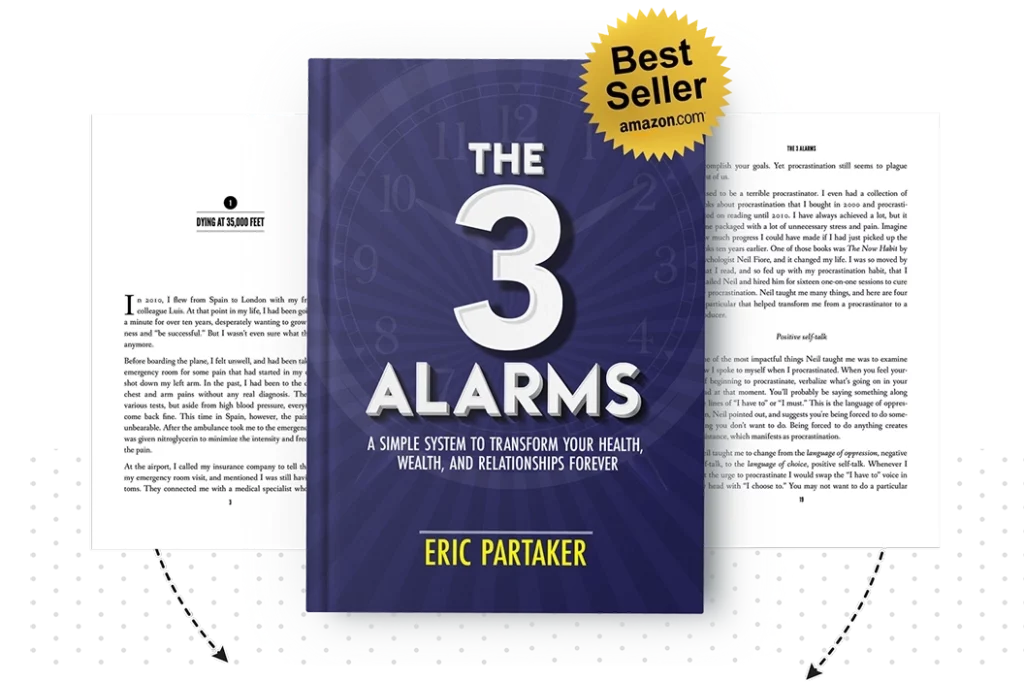
      1. Download my FREE ebook The 3 Alarms.
      2. Learn how to scale yourself and your company in one of our free, live sessions.
      3. Take our free training “Become a Better CEO in 37 Minutes” and sharpen your skills as a leader.
      4. Apply now for the Founder & CEO Accelerator and become the elite CEO your team deserves.

      Follow:
      Eric Partaker has been recognized as the CEO of the Year, one of the Top 30 Entrepreneurs in the UK, and one of Britain's 27 Most Disruptive Entrepreneurs. Over more than 25 years, Eric has advised Fortune 50 CEOs at McKinsey & Company, helped build Skype’s multi-billion dollar exit to eBay, and helped scale 600+ companies. Today he runs the ScaleOS 10x Coaching Program and The Founder & CEO Accelerator - both online CEO coaching programs that help ambitious CEOs scale their companies and become world-class leaders. He is also the author of the Amazon bestseller The 3 Alarms and the upcoming book Ultraproductive, which help people maximize their productivity and operate at their full potential.

      Join the 2% of people operating at their full potential. Receive a concise, actionable, peak performance insight, delivered straight to your inbox every 7 days. Over 235,000 people subscribe. Enter your email now and join us.

      Become a better CEO in just 37 minutes

      Become a better CEO in just 37 minutes

      Get exclusive access to your free training today

        We will never sell your information to third parties

        Home
        Account
        Cart
        Search

        Is Your Company Ready to Scale?

        Take our 3 minute assessment to find out.