How To Be Confident In Any Situation// Do you want to know how to have more confidence? Watch this video to learn how to build self confidence, boost self esteem and overcome self doubt and insecurity to reach your full potential in life. Learning how to be more confident will give you the certainty to believe in yourself, so you can achieve your biggest dreams and most ambitious goals.
KEY POINTS
Control Your Emotions! – Pause between a trigger and your response so that you can choose the optimal most courageous response.
What’s Your Value Proposition? – You are unique, you have special strengths, gifts and abilities. Sit down and write out what those are. What makes you special?
Eliminate Self Doubt – Visualize at the start of a day what are the various things that could go wrong? How might your day not go to plan? Picture yourself at your most courageous and visualize how that version of you would respond.
Stress Is A Superpower – To achieve our strongest self physically, we must stress ourselves. Anticipate stress, embrace it and seek it as a way to build your strength.
Practice, Practice, Practice – The best way to become more confident is by practicing. Go ahead, make mistakes and learn from them.
Act As If You Are Confident – Acting as if you are in the state that you want to be will make you enter that state and work through your struggles in a confident way.
Face The Wolves – Walking into discomfort allows us to grow and progress into a confident person. Do the activities that require confidence in order to build it.
TRANSCRIPT
People say that confidence is something that you’re born with, you either have it, or you don’t. But they couldn’t be more wrong. Confidence is like a skill that you can build just like any other skill. So you have a choice. Allow yourself to be held back by low levels of confidence, or build a skill, become more confident, and achieve your most ambitious dreams and goals. So stick around because today I’m going to teach you how to become a more competent person.
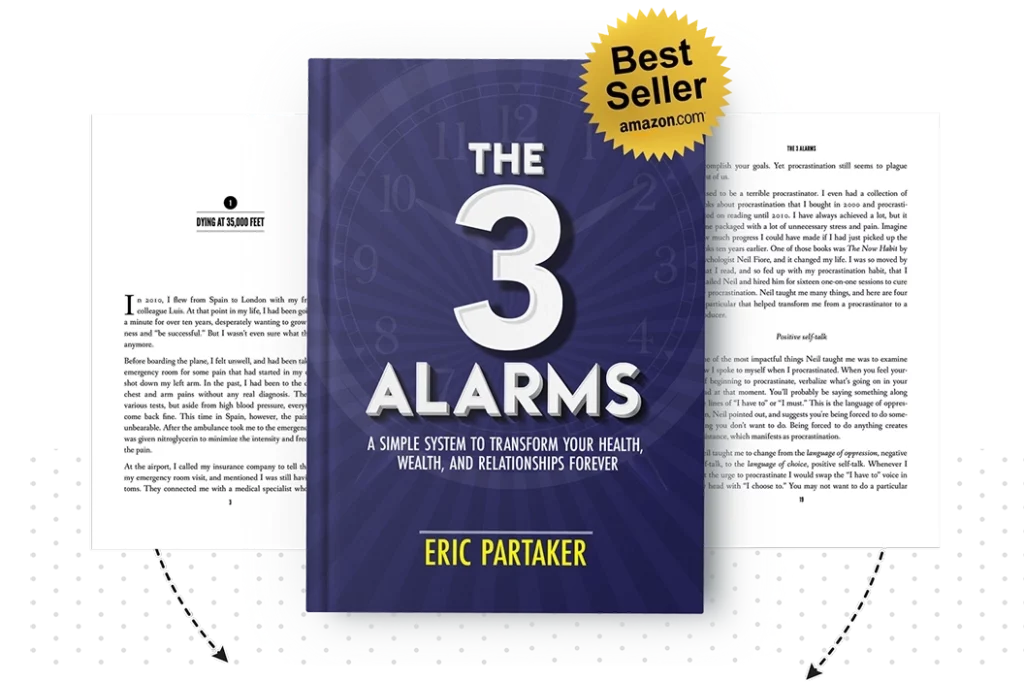
Hi, my name is Eric Partaker and I’ve been recognized as a CEO of the year, and I’m also a peak performance expert. I’ve also written two best-selling books, including The 3 Alarms. So number one, one of the first things that you can do to become a more confident person is to develop what’s called emotional control. When we react to things that aren’t going our way or stresses or triggers, it can often destroy our confidence. And one of the simplest things that you can do to develop your emotional control is pause when something comes your way that you weren’t expecting, when something makes you a bit anxious or makes you a bit fearful.
Before you react right away, just take a moment to pause. Pause between that trigger event and your response that you can choose what is the optimal, most courageous response? In fact, in that moment, in that pause when you’re deciding how best to respond to a particular situation, think of the most courageous version of you, the bravest version of you, the most confident version of you and summon that version of you before you choose how you’re going to respond in a particular situation. Almost ask that version of you, “Hey, how would you respond in this situation?” And then just follow the orders, just follow those instructions because there is a courageous version of you within.
The number two thing that you can do is create your individual value proposition. What do I mean by that? We all are unique in some way, we all have special strengths, gifts, abilities. And it’s worth sitting down and taking some time to write those out. What makes you special? Pretend there’s a newspaper and the headline says, “You are one of the most special people on the planet.” If they were going to write that article about you, what are some of the things that they would have to say in that article to substantiate or validate that headline? Write those things out, single page, write whatever comes to mind and then sit there and reflect on that because the very things that you write are the things that you need to believe on a more regular basis. And the more self-belief you generate around your strengths, around your skills, around those special abilities, the more confident you will become.
Number three, we have to eliminate self-doubt. And one of the most powerful ways that we can eliminate self-doubt in our quest to become more confident is to actually visualize at the start of a day, for example, what are the various things that could go wrong? How might the day not go to plan? And then once again, as stated earlier, picture that most courageous version of you, the most confident version of you, the bravest version of you and visualize in those situations when things aren’t going to plan how that version of you would respond. Rehearse that in your head and think about it in advance of the situations during the course of the day that might throw you off track. And by anticipating those obstacles, those setbacks, those difficulties, those frustrations, and then visualizing how you, the most confident version of you would respond, you’ll be much more likely to respond actually in that way.
Number four, we need to expect stress, that stressful things will happen in the context of a day. Let me ask you a question. When was the last time you went into the gym and you asked them to show you to the most comfortable weights? Or that you ask them to show you the most comfortable possible exercises that you could do? That never happens because we know that, to achieve our strongest self physically, that we must stress ourselves, that the stress actually builds strength. So we need to change our mindset and the context of the day, anticipate stress, actually embrace it, seek it as a way to build your strength. You do this with your body physically, so we just need to get this up into your head mentally. And when you do that, when you start to view these stressful situations as a way to build your confidence, as a way to build your strength, almost as if they are weights in the gym of life, then you’ll be much better suited to face them, to handle them, and to actually become stronger as a result of them.
Number five, if you want to boost your confidence, practice, practice, practice whatever it is that you’re trying to learn or be more confident in. Maybe it’s a new particular skill or perhaps it’s something that you’ve not done before, a new business that you want to start. The best way to become more confident to support you in these new plans or these new things that you’re doing is to practice the key skills that are associated with these activities.
By practicing, you’re able to go ahead and make those mistakes in advance of the actual situation or performance and fine tune those things, fine tune those errors and improve so that on show day or whatever it is, when you’re up there on stage or you’re actually doing the new thing that you’ve been trying to work on or develop, you have all of those repetitions behind you. You’re in a much better position to actually execute better because of all that practice that you’ve put in, in advance. So if you want to become more confident, identify what are the key things that you need to be doing or learning and practice those skills, practice makes perfect.
Number six, if you want to boost your confidence act as if you are confident. If you walk into a situation like this and you’re like, “Oh my gosh, I’m not sure how this is going to go” versus, “Boom. I’m here. I’m ready. I’m confident. I’m ready to take on whatever the challenge is” acting as if you are in the state that you want to be will actually make you enter that state and work through whatever that is in a more confident way. It’s sort of like, for example, if you give a child a superhero costume, they immediately become that superhero. They immediately act as if they are that hero because behavior follows identity. So if you want to boost your confidence, walk into that room in a confident way, head up high, shoulders back, and act as if you are the confident person that you want to be and you will become that person.
Number seven, if you want to boost your confidence in any situation, be willing to walk towards those situations. We need to face the wolves. It’s by walking into the discomfort, it’s by going towards the things that make us not confident that we become more confident. Don’t sit around and hoping to just become more confident. It’s the act of doing the things that you think require confidence that actually make you more confident. So we need to flip the script and how we think about confidence. It’s not just a gift waiting to be given to us or that we hope to acquire. We need to do the things that we think require confidence actually to build our confidence.
So in summary, confidence is a skill that you can build just like any other skill. Don’t wait around hoping to become confident. You need to work on it. You need to develop and use the seven different ways that I’ve taken you through today so that you can become a more confident person. Why? So that you can achieve your biggest dreams, so that you can achieve your biggest goals. It’s down to you. You have everything that you need to become the confident person that you hope to be. And I’d love To hear from you, so don’t forget to leave a comment and a rating as well. And if you’d like to get a copy of my new book, The 3 Alarms, please head over to my website at ericpartaker.com. That’s E-R-I-C, ericpartaker.com, where you can pick up a free digital copy of my new best-selling book, The 3 Alarms.